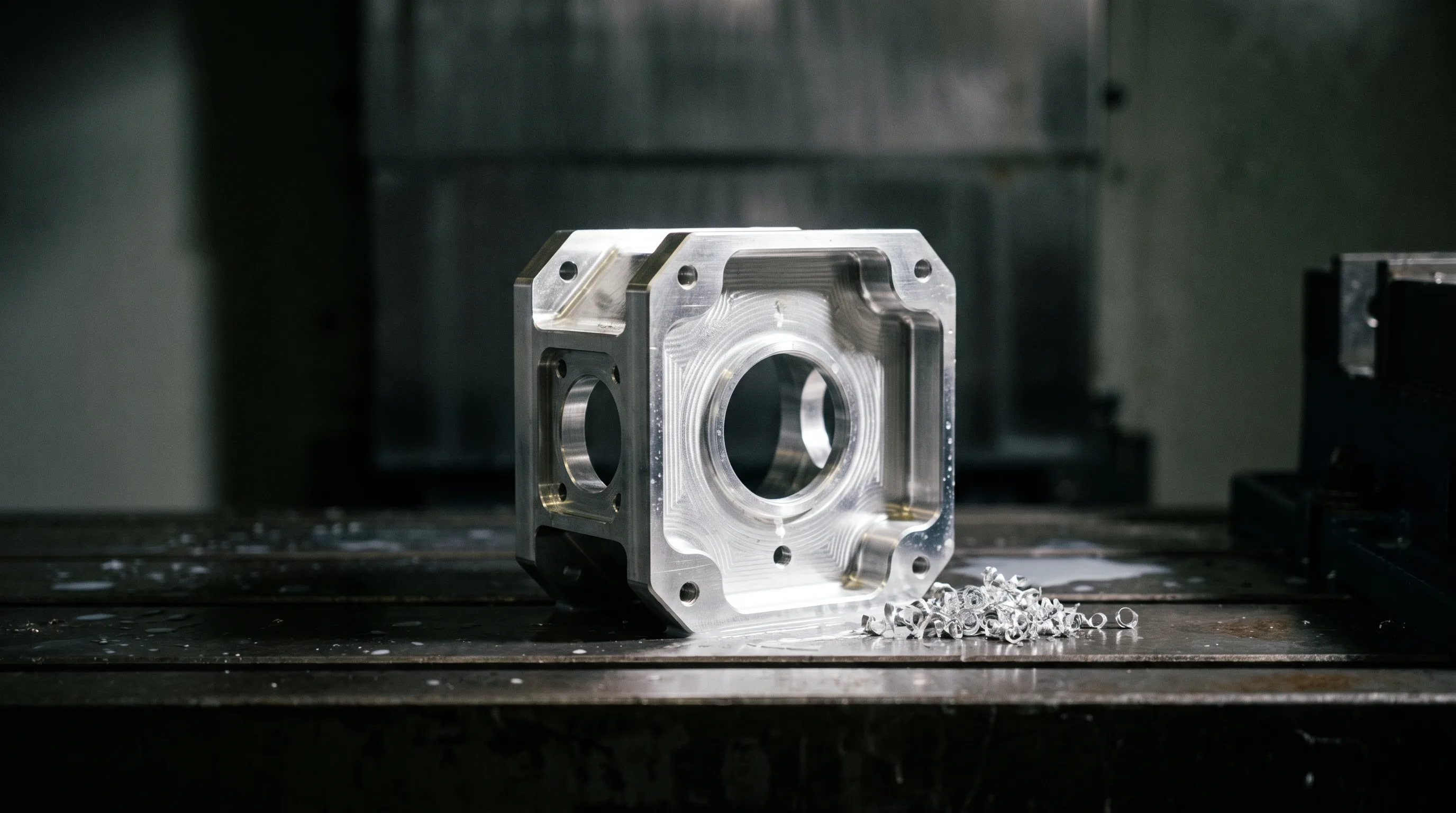
READ BY A PERSON · HELD AND CUT · THE CHANGE THAT OPENS IT
Declined by the software. Read by a machinist.
THE MODEL · THE DRAWING · WHY IT WAS TURNED AWAY
WHY DOES AN INSTANT QUOTE TURN A PART AWAY, AND WHAT HAPPENS WHEN A PERSON READS IT INSTEAD?
An instant quote prices the geometry its rules recognise and turns away, or parks for review, whatever falls outside them: an undercut, a surface with no flat in it, a requirement that lives on the drawing instead of in the model. Here the same file is read by the people who would cut it, and the answer is the way through the shop or the one change that would open it.
By Cyclone Machining Co.Updated
◆01·WHAT THE SOFTWARE DOES
It prices what it recognises.
An automated quote reads the 3D model, matches what it finds against the rules of the processes it was built around, and prices the features those rules cover: pockets and holes a standard cutter reaches from above, walls it can hold, stock it expects to have.
A part that does not fit is turned away or set aside for a person. The platforms publish this themselves: a drawing with tolerances on it, and features outside their standard, go to a manual review. A refusal marks the edge of a rule set. It is not a finding about whether the part can be made.
◆02·WHAT IT CANNOT READ
Five things a rule set does not see.
Reach. A feature a standard cutter cannot get to from above, such as an undercut, a groove on an inside wall or a port that enters at an angle, needs a special tool or a part tilted to meet the tool. Rules built on straight-down access price neither.
Surfaces with no flat in them. A swept or blended surface is cut by a toolpath somebody plans, not by a feature a library can count, and its cost depends on how the part is held while that path runs.
What lives on the drawing. Tolerances, a finish called in words, a datum scheme, a note saying which face seals: the model does not carry them, the engine reads the model, and the drawing goes to a person regardless.
The hold. A part that is thin, oddly shaped or has nothing square to clamp needs a fixture of its own before the first cut, and that cost is invisible in the geometry alone.
A quantity of one. When the setup is most of the work, a single part is the one a pricing model is least sure about, and the one it is quickest to set aside.
◆03·WHAT A PERSON DOES WITH IT
Read for how it will be held and cut.
Here the file is opened by the people who would program it and run it. Before any number goes back the print is read for feasibility: which features decide whether the part works, what each one asks of the machine, and how the part will be held so nothing moves while it is cut.
A reach problem is often a hold problem in disguise. On the five-axis the part is tilted to meet the tool, so an angled port or a wall behind a lip is cut with a short tool from one setup instead of being declined. Where a feature genuinely cannot be cut as drawn, it is named, the smallest change that would let it be cut is suggested, and the decision stays with the person who designed it.
◆What a rule set does not see
The rule set · straight-down access
A person · the part tilted to meet the tool
The rule set · straight-down access
A person · the part tilted to meet the tool
IT PRICES WHAT IT RECOGNISES
Pockets and holes a standard cutter reaches from above; an undercut, a groove on an inside wall or a port that enters at an angle falls outside the rules and is turned away or parked.
THE DRAWING GOES TO A PERSON
Tolerances, a finish called in words, a datum scheme, a note saying which face seals: the model does not carry them, and the engine reads the model.
TILTED TO MEET THE TOOL
A reach problem is often a hold problem in disguise; on the five-axis the part is tilted so an angled port or a wall behind a lip is cut with a short tool from one setup instead of being declined.
◆04·WHAT TO SEND
The file the software turned away.
Send the same model, unchanged, and the drawing with it, because the drawing is where the decisions are. STEP is the working format; IGES, DXF and a PDF print upload with the request, and a native model can come by email. Add a line on what the part does and what it fits against.
Say why the quote turned it away, if it said. The reason a platform gives is a lead, and the feature it flagged is the first one read. A single part is quoted as a real job, and a part posted from any state is read the same way as one carried through the door. Signing your NDA first is normal; attach it with the print.
◆05·WHAT COMES BACK
A route, or the change that opens one.
What comes back names the setups the part will take, the features that decide it, and anything on the drawing worth talking through before metal is cut. If a feature cannot be made as drawn, you hear which one and why, together with the change that would let it be made.
Nothing here prints a price or a date, because both are read from the part in hand. The number is built from this part: its material, the setups it takes, the finish and the inspection its drawing asks for. A person writes it.
THE QUESTIONS PEOPLE ACTUALLY TYPE
Asked by people holding a declined quote.
6 answers. The questions that arrive with a file an online quote would not price, in the words they arrive in.
Why did the instant quote reject my part?
Usually because a feature fell outside the rules the engine prices by: a cutter cannot reach it from above, a surface has no flat for the software to count, the part needs a fixture before it can be cut, or the drawing carries requirements the model does not. The refusal describes the limits of the software, not the part.
Does manual review mean the part can't be made?
No. It means the software handed the decision to a person. Here that person is someone who would program and cut the part, reading it for how it will be held and what each feature asks of the machine.
Can you machine a part an online quote declined?
When the reason was reach, the hold or a quantity of one, that is the ordinary work here: parts tilted on the five-axis to meet the tool, parts that need their own fixture, single prototypes. If a feature truly cannot be cut as drawn, you are told which one and what would change it.
Do I have to redesign it before I send it?
No. Send it as it is, with the drawing. If a change would make a feature possible or simpler to cut, it is suggested with the feature named, and the choice stays yours.
Will you quote just one part?
Yes. A quantity of one is a real job here, and it is quoted from the part and its drawing, not from a table.
Can I send it from another state?
Yes. The model and the drawing come by upload or email, and the part itself, if there is one, comes by post from anywhere in the country.
Sources
They support the general facts. The shop practice is its own.
- One instant-quote platform's own published standardsA dimensioned drawing with tolerances, and features outside the standard, go to a manual review.
- How tool access limits a machined designThe cutter approaches from above; a feature it cannot reach that way needs a special tool or a different hold.
- What an undercut isA recessed surface a straight-down tool cannot reach.
Send the file the software turned away.
The model unchanged and the drawing with it, plus a line on what the part does. What comes back is the way through the shop, or the one change that would open it, written by the people who would cut it.