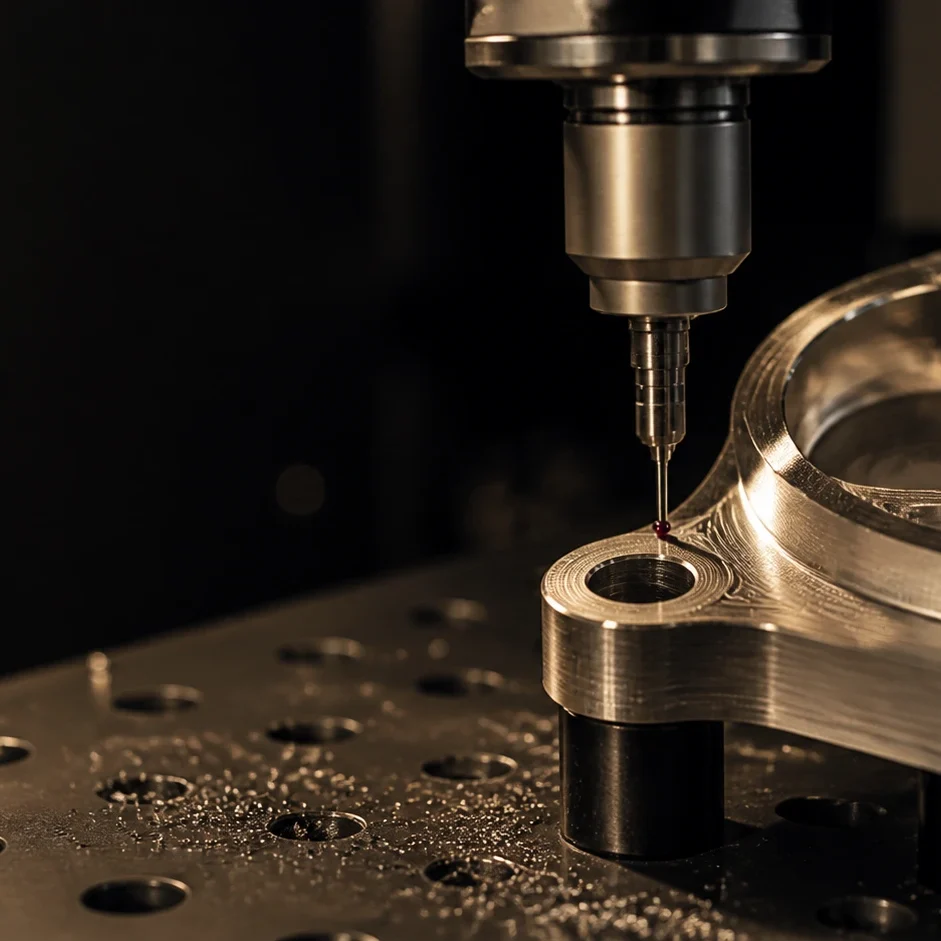
HOLDING TOOLING · FIXTURE PARTS
It holds the part the same way. Every time.
FIVE-AXIS · FIXTURE PARTS & HOLDING TOOLING · GRAND RAPIDS MI
WALK IT THROUGH
Tell me about the tooling.
Same questions job control would ask on the phone, in the same order. Answer what you know — the rest we read off the model.
What are we making?
Where the part is in its life tells me how to plan the cut.
BEFORE YOU SEND ANYTHING
What a fixture buyer actually asks.
WHAT DO YOU ACTUALLY MAKE?
Fixture parts and holding tooling — the hardware that grips and locates. Machined so the part it holds sits the same way every time.
WILL IT STILL LOCATE IN SIX MONTHS?
Locating faces and bores are cut in the same setup wherever the geometry allows, so the datums do not argue with each other. Wear shows up on the surfaces meant to take it, not on the ones doing the locating.
WHAT IF MY PART ISN'T A FIXTURE?
Send it anyway. Fixtures and holding tooling are the doorway here, not the ceiling — the same five-axis machines cut prototypes, first articles and one-off hardware, and job control reads your print either way.
WHAT HAPPENS WHEN THE PRINT CHANGES?
Part two is not a restart. The setup, the fixturing and what was learned cutting part one stay on the job, so a revision costs the change and not the whole thing again.
THE HARDWARE ITSELF
Locating features are the whole product.
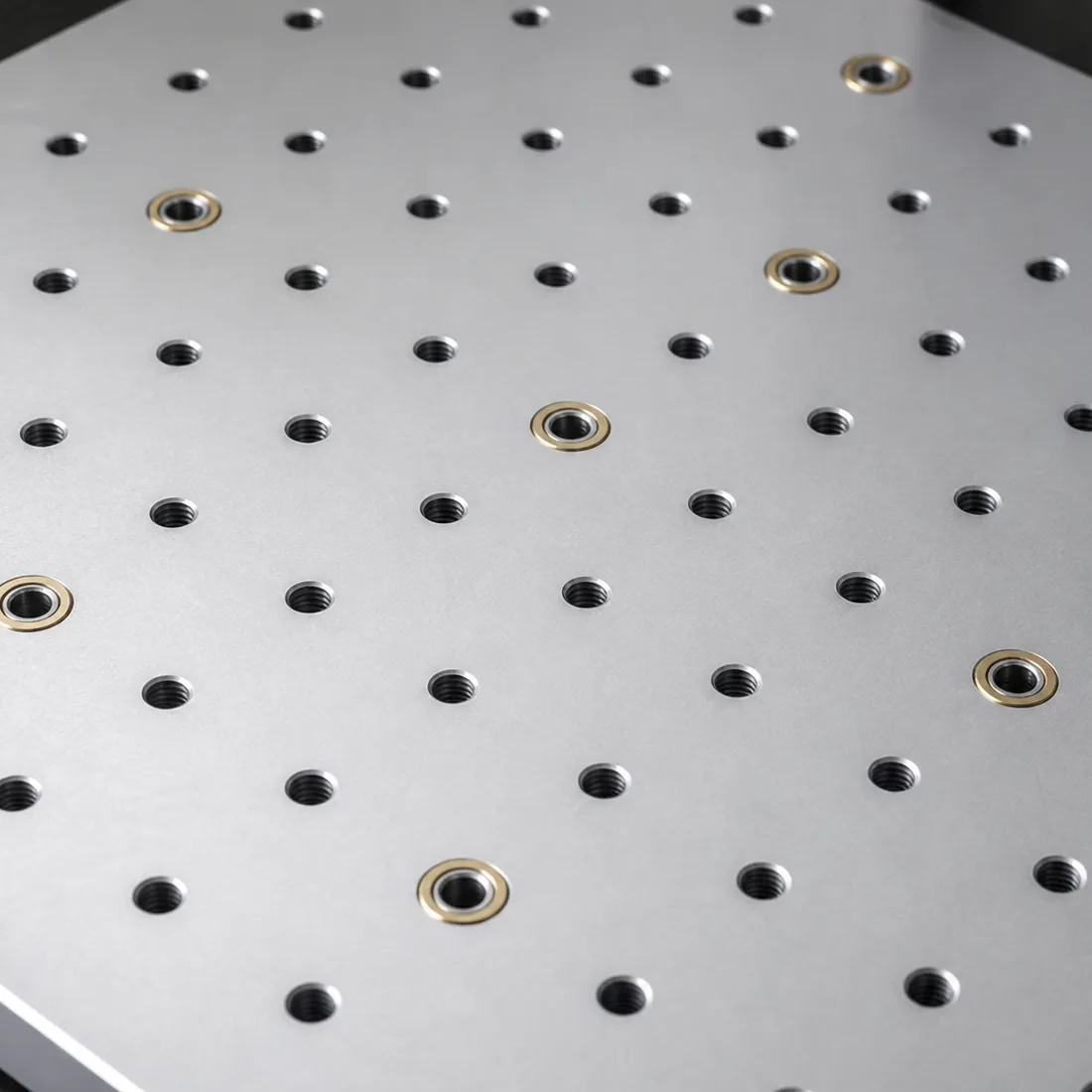
A tooling plate is only as good as the holes in it. Bushed bores locate, tapped holes clamp, and the two jobs are kept separate so the part that wears is not the part that positions. Cut on the five-axis, then checked before it leaves.
Send the fixture that keeps drifting.
The drawing, the model, or the tooling as it is today. Say which faces locate and which take the wear; the locating faces are cut in the same setup wherever the geometry allows.