PROTOTYPES · ONE-OFFS · PROOF OF THE CEILING
The one-off nobody wants to quote.
FIVE-AXIS · INCONEL 718 & TITANIUM · FINISHING IN-HOUSE · GRAND RAPIDS MI
WALK IT THROUGH
Tell me about the part.
Same questions job control would ask on the phone, in the same order. Answer what you know — the rest we read off the model.
What are we making?
Where the part is in its life tells me how to plan the cut.
BEFORE YOU SEND ANYTHING
What an aerospace buyer actually asks.
WILL YOU TAKE ONE PART?
One is a real job here. Development hardware arrives as a first article and then as a revision of it — never as a run — so nothing about a quantity of one has to be accommodated.
HOW COMPLEX IS TOO COMPLEX?
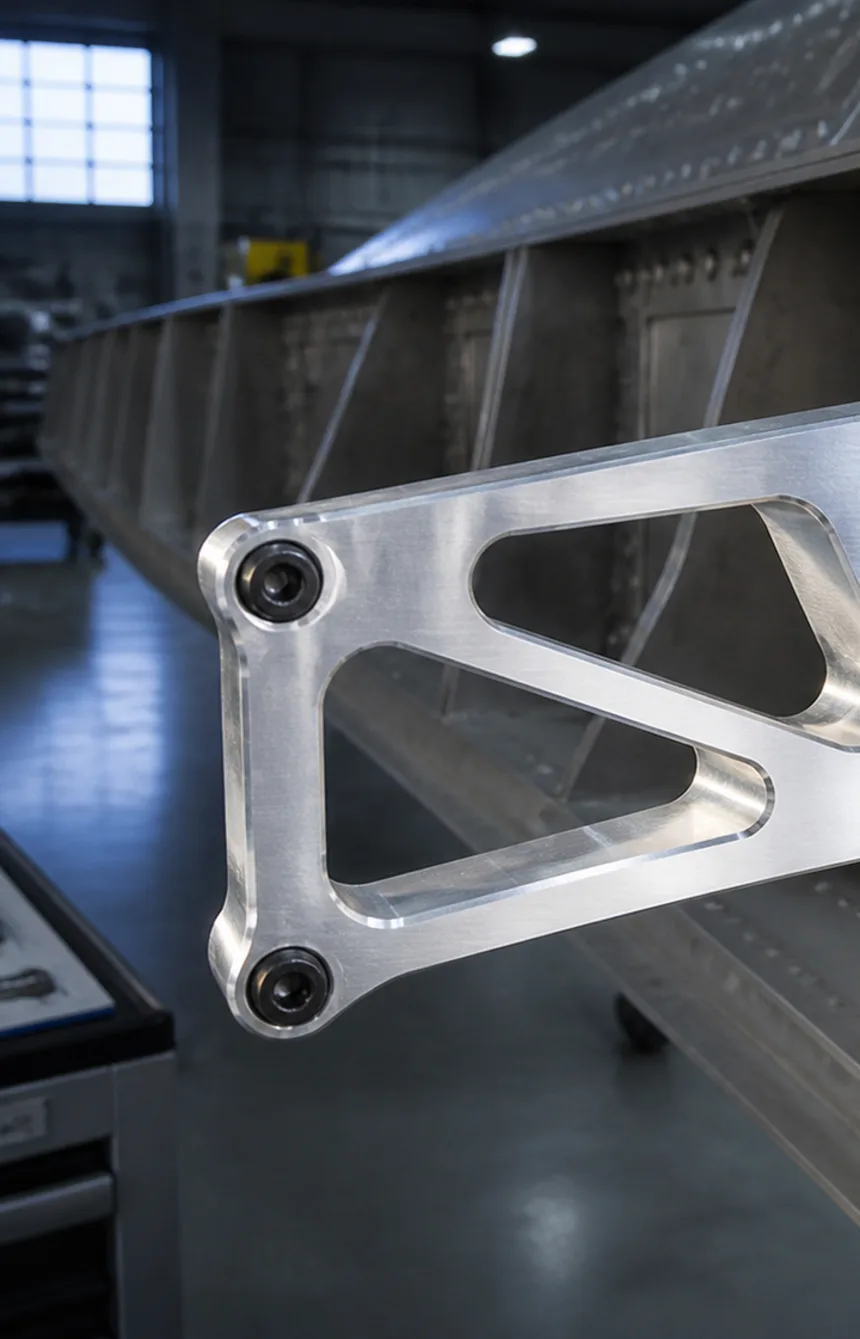
Five-axis means the part is cut in fewer setups, so the features that have to relate to each other are cut while the part has not moved. Bladed geometry, deep pockets and compound angles are the reason the work arrives here.
WILL THE MATERIAL FIGHT YOU?
Inconel 718 and titanium are routine here, not an exception. They change the tooling, the speeds and the fixturing before the first chip comes off, and that is planned, not discovered.
WHAT HAPPENS WHEN THE PRINT CHANGES?
Part two is not a restart. The fixturing, the setup and what was learned cutting part one stay on the job, so a revision costs the change and not the whole thing again.
Send the geometry that scares them.
The drawing or the model, with the material and its condition on it. A single part in a nickel alloy is the job, and the second one does not start over.