SURFACE WORK · PROTOTYPE & R&D
The surfaces that define the part.
VAPOR BLASTING · HONING · SHOT PEENING · GRINDING · GRAND RAPIDS MI
01On the surface
Four processes. One standard.
Finishing is not a step that happens to a part after the machining is done — it is part of how the part is planned. The removal sequence, the fixture and the finish are decided together, so the surface arrives without the dimension moving to get there.
01
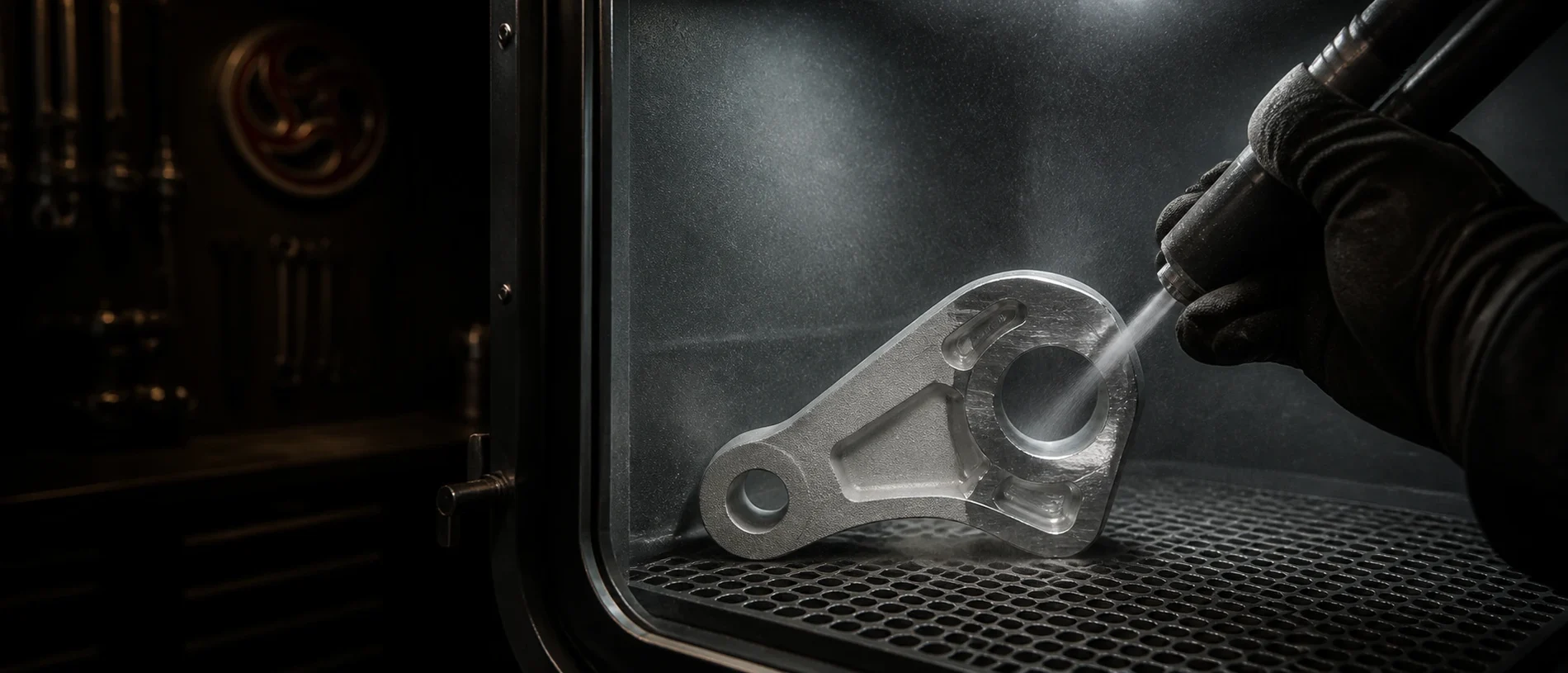
VAPOR BLASTING
Wet media against the surface, twice over — two cabinets plus a dry cabinet.
So you canBurr and scale come off without rounding an edge or losing a dimension. You can specify a uniform satin on a part whose tolerances are already held, and get it back the same size.
02
HONING
Precision bore finishing on a dedicated honing machine.
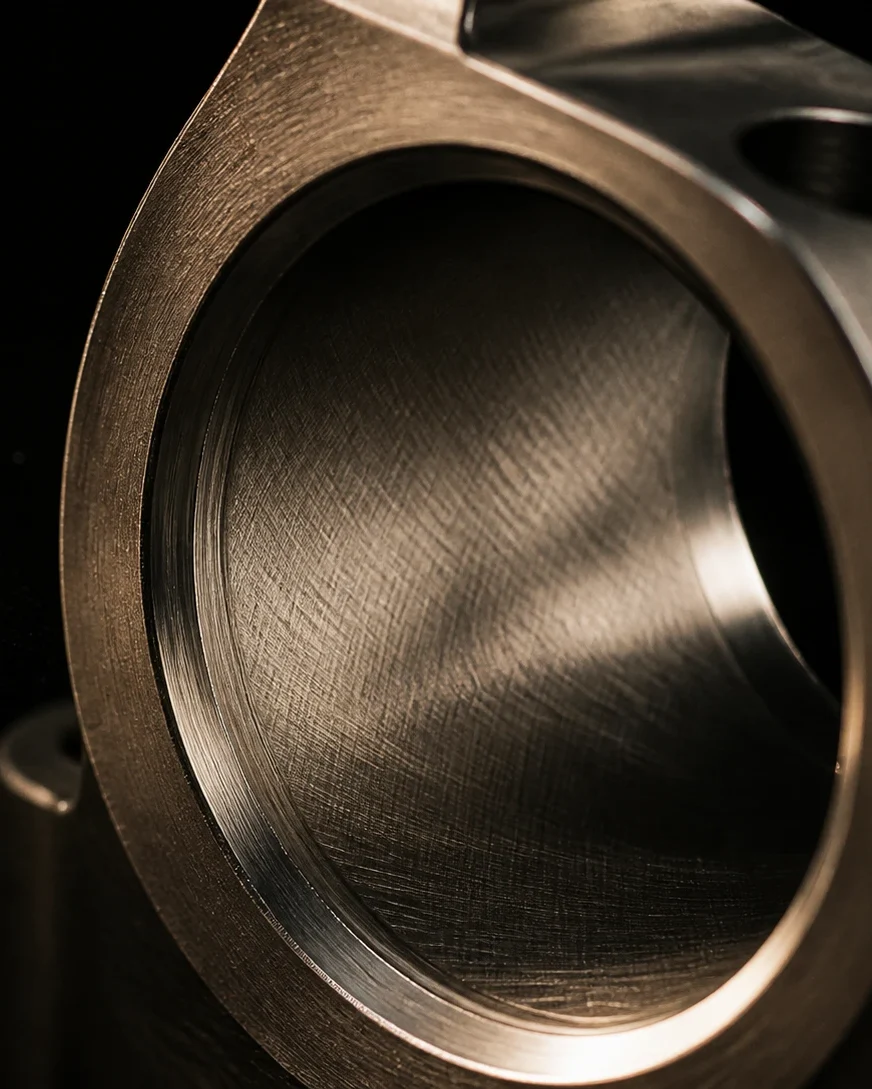
So you canYou can design a hydraulic sealing surface or a precision journal and have the bore geometry — roundness, straightness, cross-hatch — arrive as drawn instead of as bored.
03
SHOT PEENING
Controlled media worked evenly over the surface after machining.
So you canA part that lives under vibration or repeated load gets a uniformly conditioned surface — worked for service, not for shine, with the dimensions you machined still exactly where you put them.
04
GRINDING & HAND SURFACING
Profile finishing, stress-relief prep, dimensional correction — and hand surfacing after machining.
So you canA feature that has to hold flat, parallel or square after heat treat can be brought back to spec before the part ships — and the final tuning a machine can't do gets done by hand. Parts don't just come off the rack; they get finished.
◆The finished specification, per tubular length
SURFACE FINISH
The cross-hatch that holds oil where the seal rides.
ROUNDNESS
A true circle at every station, not just at the ends.
STRAIGHTNESS
The same bore all the way through the length.
◆The same part, twice
One housing. One light. Two surfaces.
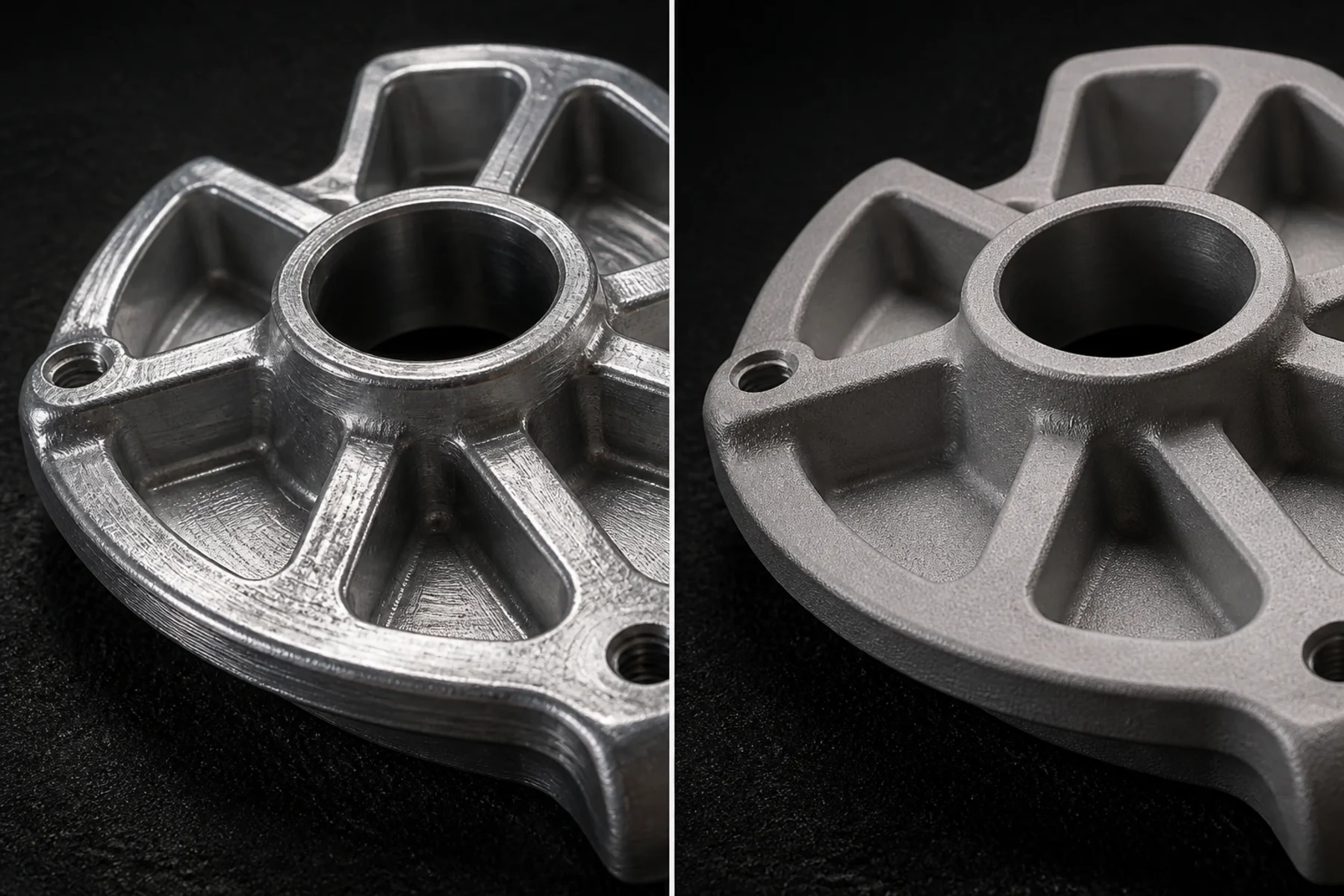 As machinedVapor blasted
02Held, not hoped
A finish is a number, not an adjective.
“Smooth” is not a specification. If the drawing calls a surface, it gets measured against that call at final inspection — the same way a diameter does.
MEASURED.against the drawing's callout, at final inspection
◆Finish, up close
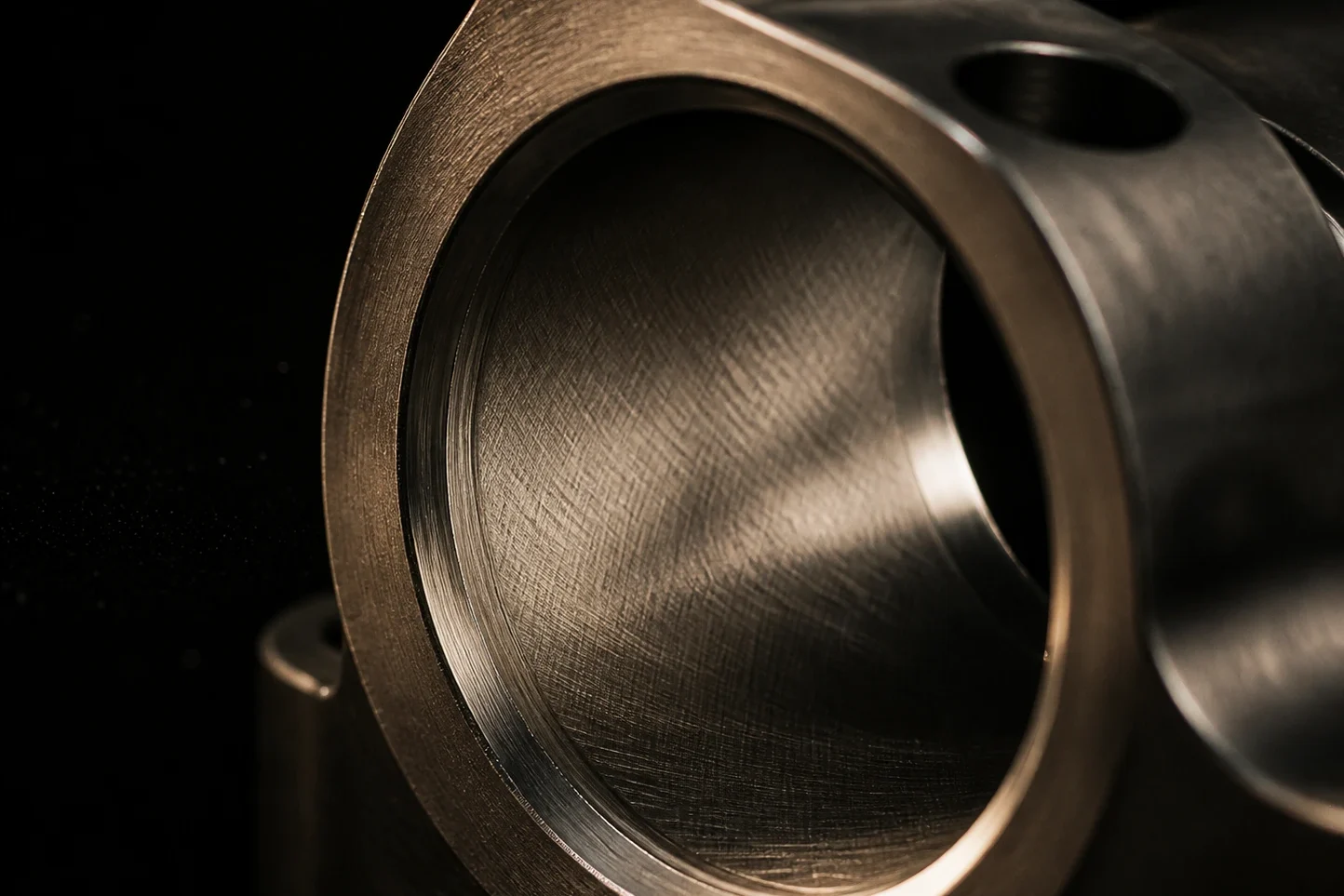
BORE · IN CLOSE
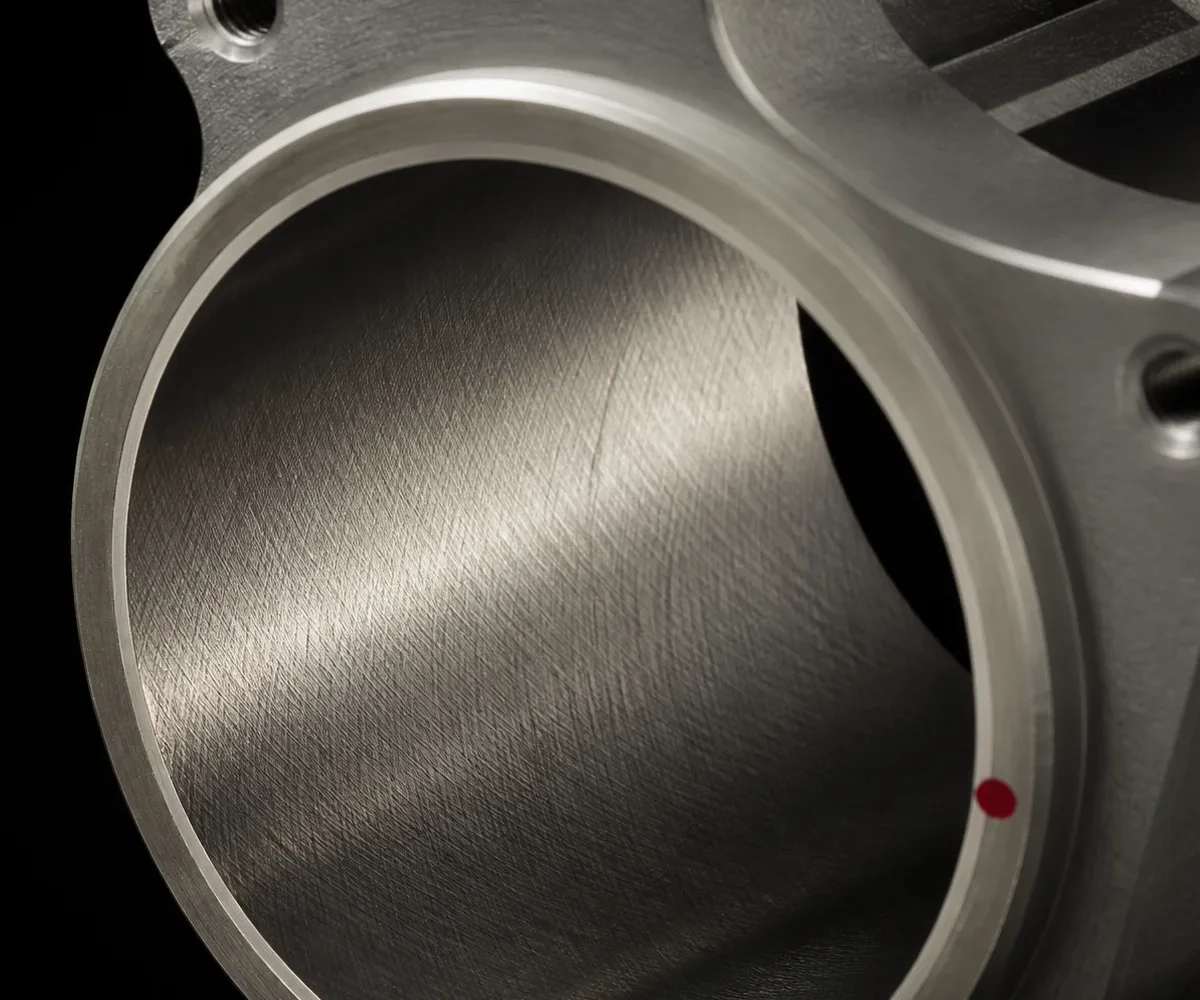
HONED BORE · CROSS-HATCH
THE CHAMFER
03How it is specified
WHAT THE FINISH IS FOR
Function. Sealing, fit, corrosion resistance, bonding prep — and a surface that measures the same after finishing as it did before.
HOW IT IS SPECIFIED
Call the surface on the drawing and it is treated like any other called dimension: planned into the removal sequence, produced, then measured against the call before the part ships.
A PART MACHINED ELSEWHERE
Yes, the surface work alone is a job here. Send the part as it is, from any state, and name the surfaces that seal, slide or bond; the honing, vapor blasting, shot peening, grinding or hand surfacing is planned around them.
Finishing is the last thing anyone sees.
Send it machined and we'll finish it, or send the drawing and we'll do both. Say which surfaces are functional and which are cosmetic — it changes how the part gets held.