MEASURED FIRST · THE HONEST ROUTE BACK TO THE PRINT · NOBODY NAMED
Send it as it stands.
THE PART · THE PRINT · WHAT THEY TOLD YOU
WHAT HAPPENS WHEN A PART ANOTHER SHOP STARTED, OR COULD NOT FINISH, COMES HERE?
A job comes back for a reason, and the reason is information. Before anyone decides what the next setup should be, the part is measured as it stands, so what the last one did is known rather than guessed; what comes back is a route through the shop, a re-make to the print it was meant to meet, or a plain account of why the print itself has to change.
By Cyclone Machining Co.Updated
◆01·WHAT TO SEND
Everything they gave you, as it stands.
Send the part exactly as it came back, and do not clean it up first: the witness marks, the half-cut feature and the burr on the edge that stopped are the record of what the last setup did. Send the print, the model if there is one, and whatever paperwork travelled with the job, which is usually a setup sheet, a routing, or an inspection report with the failing feature circled.
Send what they told you, in their words if you can. A shop that hands a job back nearly always says why, and the reason they gave is a lead even when it is not the whole story. A feature nobody could fixture, a wall that moved when it was cut, a tolerance that fought the material, a datum that could not be reached from the side it was drawn on: each of those points at a different next setup.
◆02·WHAT THE MEASUREMENT IS FOR
Known, not guessed.
The first thing that happens is that the part is measured, not re-started. Every feature that has already been cut is read against the print, on the bench and on the CMM where the feature calls for it, so the shop knows which features are where they should be, which have moved, and how much material is left to reach the ones that are not there yet.
That reading is what the decision is built on. A part that is half machined still carries most of its future in it, and the setup that is left may be the setup that was wrong. Reading it first is how the next setup is chosen for the part that exists rather than for the part the print imagined, and it is why the part is never touched by a tool before it has been touched by an instrument.
◆Read before it is touched
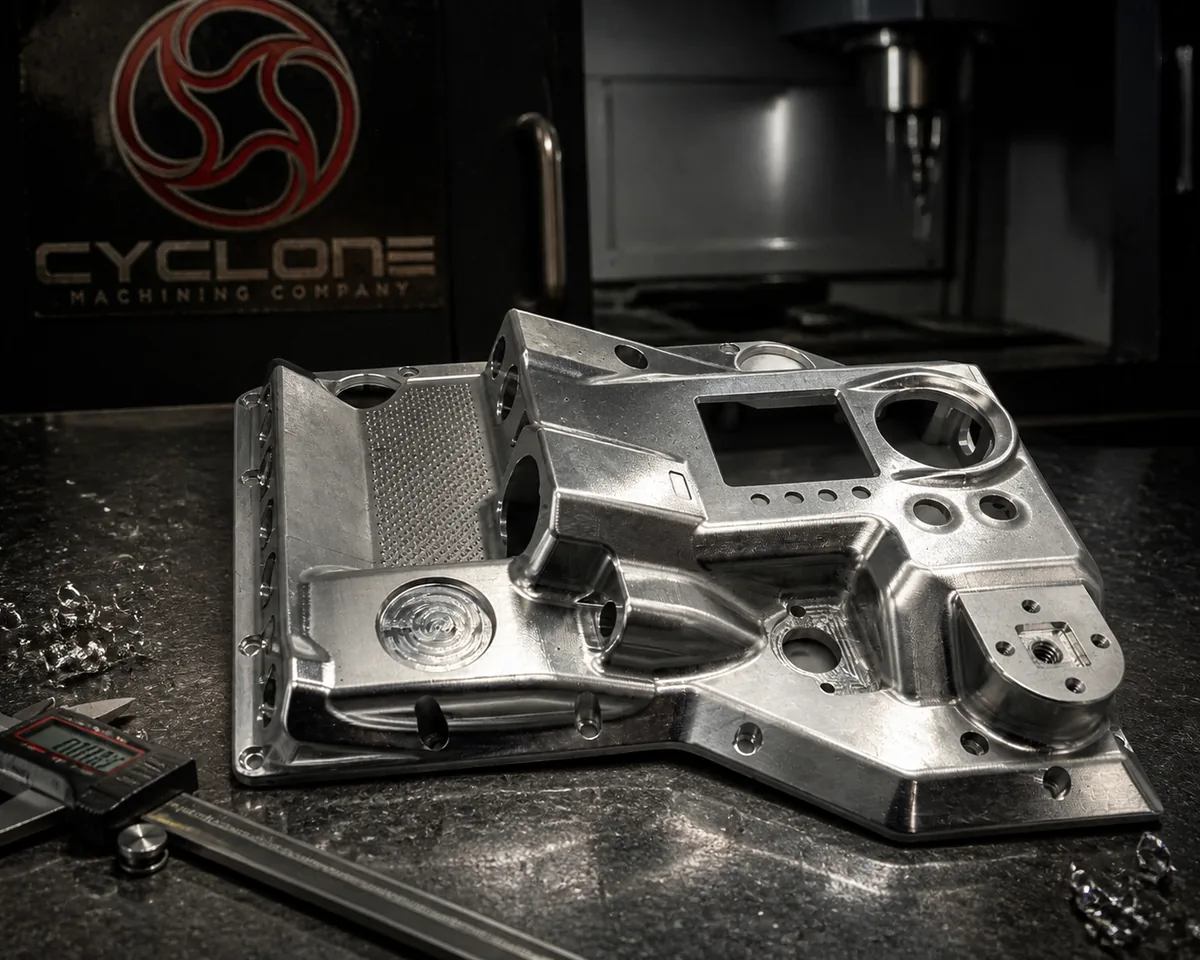
As it came back · one pocket finished, one slot stopped
On the plate · what moved, and what is left
As it came back · one pocket finished, one slot stopped
On the plate · what moved, and what is left
MEASURED BEFORE IT IS TOUCHED
Every feature already cut is read against the print, so the shop knows which are where they should be, which have moved, and how much material is left to reach the ones that are not there yet.
WHAT MOVED, WHAT IS LEFT
The witness marks, the half-cut feature and the burr are the record of what the last setup did; they stay on the part until it has been read.
THEN THE DECISION
Carried through from a setup planned around what is there, re-made to the print, or told that the print itself has to change - and you hear which before anything is ordered.
◆03·THE THREE HONEST OUTCOMES
Carried through, re-made, or told the truth.
Carried through. The remaining features are cut from a setup planned around what is already there, with the datums re-established from the faces that are right rather than from the ones that moved. This is the usual outcome for a part that came back because a feature needed a different hold, a different reach, or a different tool than the last shop had.
Re-made to the print. Sometimes the measurement shows that what is left cannot reach the print from any setup, because too much has gone or the wrong material is left in the wrong place. Then the honest route is new stock, cut to the print it was always meant to meet, and you hear why before anything is ordered.
The print needs to change. Sometimes the part came back because the drawing asks for something the material or the geometry will not give: a tolerance that fights the wall it sits on, two features that cannot both be held from the same datum, a callout that only reads one way on paper. Then you are told that instead of quoted, with the feature named, and the next print is the one that gets cut.
◆04·WHAT IS NOT SAID
Nobody is named. Not them, not you.
The other shop is never named here, in a caption, in a conversation with anyone else, or on this site, and the same rule covers you: no customer, part or programme is published anywhere on these pages, and that is enforced before a page ships rather than promised afterwards. What went wrong is described as what the part is today, measured, never as a verdict on anyone.
The work itself is confidential by nature. A part that comes back mid-development is somebody's unreleased hardware, and it is treated the way every drawing here is treated: used to quote and to cut the part, and never shown. Signing your NDA first is normal; send it with the print.
◆05·WHAT WE WOULD RATHER NOT TAKE
The line, drawn plainly.
This page is about a part being built new to a print that another shop started and could not finish, or the part that comes back for a reason. It is not a repair counter. A worn engine or a classic-car part brought in to be made like new, a cracked tool brought in to be welded up and sent back to the press, production quantities, and a bright show finish for its own sake are not the work here, and you will be told so instead of quoted.
Being told is worth something. A yes that turns into a schedule problem later costs a tool room or a development programme more than an honest no on the first call, and a shop that knows what it is for is the shop that can say it.
◆06·WHAT COMES BACK
A route through the shop, written by the people who would cut it.
What comes back is not a form response. It names the features that were measured and what they read, the setup that would carry the part through and why that setup and not the last one, and the point at which the print rather than the part is the problem, if that is what the measurement says. A person who has held the part writes it.
There is no price on this page and no promised date. The quote is built from the print, the part as it stands, and the setups it will actually take, one part at a time. A single part that another shop handed back is a real job here, and it is quoted as one.
THE QUESTIONS PEOPLE ACTUALLY TYPE
Asked by people holding somebody else’s setup.
7 answers. The questions that come with a part that has already been somewhere, in the words they arrive in.
What should I send with it?
The part as it came back, uncleaned; the print or the model; any setup sheet, routing or inspection report that travelled with it; and what the other shop told you, in their words. Send the mating part too if you can spare it, because a feature that has to fit something is measured against the thing it fits.
Will you tell me what went wrong?
You will be told what the part is today, measured: which features are to the print, which have moved, and what is left to work with. That is a description of a part, not a verdict on a shop, and the other shop is not named by us to anyone.
What if the print is the problem?
Then you are told that instead of quoted. The feature is named, the reason it cannot be held as drawn is explained in plain words, and the print that comes back from you is the one that gets cut. A part re-made to a print that cannot be met would only come back a third time.
Can you finish a part that is already half machined?
Often, yes. The setup that is left is read first, the datums are re-established from the faces that are right, and the remaining features are cut from a setup planned around what is already there. Sometimes the honest route is new stock, and you hear why before anything is ordered.
What do you not take?
A worn engine or a classic-car part brought in to be made like new, a cracked tool brought in to be welded up and returned to the press, production quantities, and a bright show finish wanted for its own sake. If the job belongs somewhere else you are told so on the first call rather than quoted and disappointed later.
Will the other shop find out?
No. Nothing about your work is published, no shop or customer is named on this site or in conversation, and the drawing is used to quote and to cut the part, and for nothing else. Your NDA is signed as a matter of course; send it with the print.
Do I have to explain why it came back?
It helps, and it is not required. The part carries most of the story in its own features, and the measurement reads that story whether or not anyone tells it. What you know that the part cannot show, such as which features have to fit something, is the part worth writing down.
Sources
They support the general facts. The shop practice is its own.
- What a coordinate measuring machine isA probe reads points on the part's surface; the part is measured before it is decided about.
- What a datum reference isThe faces a print measures from; when they have moved, the next setup starts from the ones that are right.
Send the part, the print, and what they told you.
It gets measured before anyone decides anything, and what comes back is a route through the shop, a re-make to the print, or the plain reason the print has to change, written by the people who would cut it. Nobody is named, on either side.