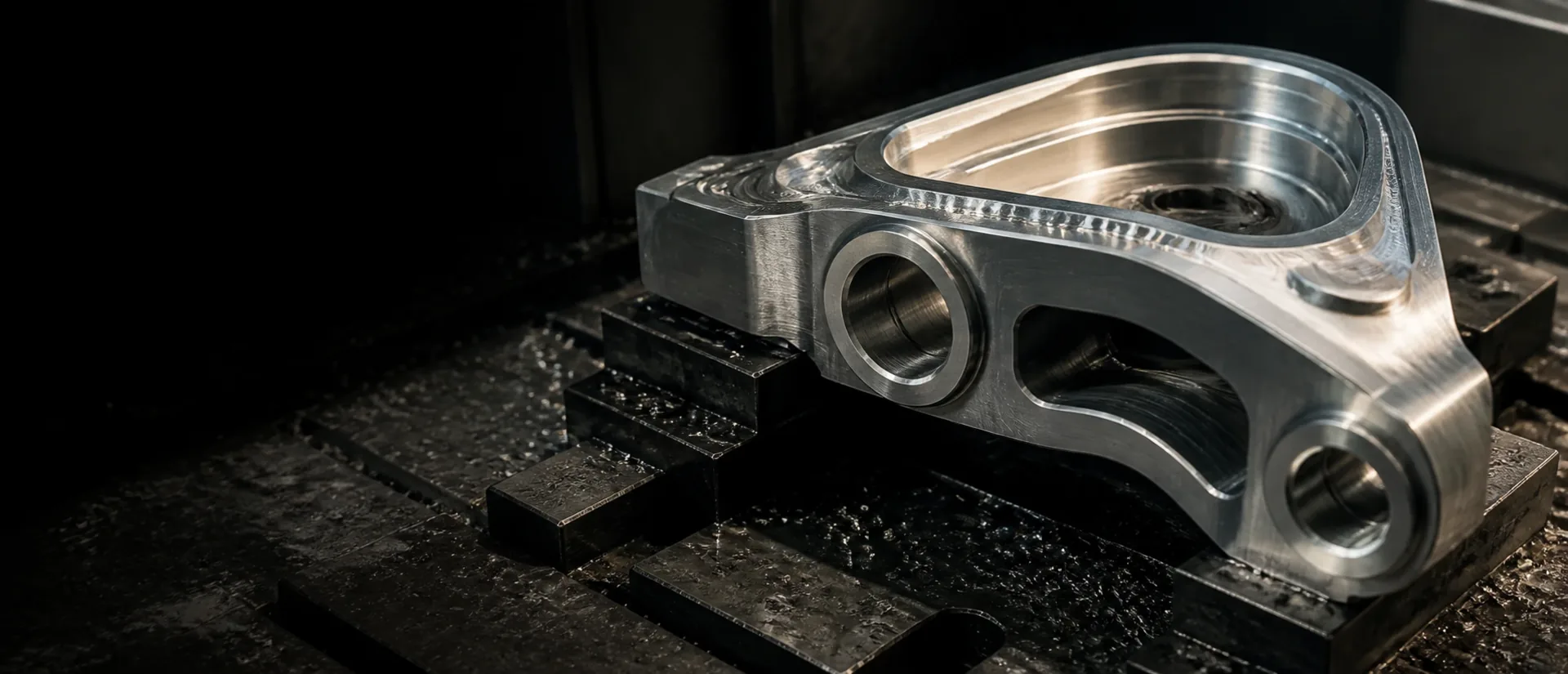
THE FIRST ARTICLE · GRAND RAPIDS
The part that doesn't exist yet.
FIVE-AXIS · HARD MATERIALS · FINISHING IN-HOUSE · GRAND RAPIDS MI
WALK IT THROUGH
Tell me about the part.
The same questions job control would ask on the phone, in the same order.
What are we making?
Where the part is in its life tells me how to plan the cut.
BEFORE YOU SEND ANYTHING
The eight things you're actually asking.
Will you take one part?
One is a real job here. First articles, revisions, and one-offs are the work — not the exception we squeeze in between production runs.
Can you hold it?
Thin walls, tight profiles, fine finishes — inspected, approved and held to print, feature by feature.
Who actually touches it?
You talk to the people who machine your part. Every time. Nothing routes through a desk that has never held the work.
What happens on part two?
Part two is the real deliverable, so part one's setup is planned so the next one doesn't start over. And if a part already failed, send it — what failed tells us more than the drawing does.
Is the print read before it is quoted?
Yes. The print is read for feasibility before a number goes back: what the geometry asks for, how the part will be held, and where it will move while it is cut.
How do I know the first one is right?
Critical features are probed in the machine while the part is still in its setup, and checked again off the machine on the CMM before it leaves.
Can I send a part or a print from another state?
Yes. Prototype machining here is not limited to Grand Rapids: parts arrive by post from anywhere in the country, and a print or a model arrives by email. Put a note in the box saying what the part is, what it does and what happens to it next.
Will you sign our NDA first?
Yes, as a matter of course. Send your NDA as a PDF with the drawing and it comes back signed. The drawing is used to quote and to make your part; it is not shared, shown as an example, or passed outside the shop.
◆WHEN THE PRINT CHANGES
Three iterations. One result that holds.
Every shop will sell you a part. What a development programme actually buys is the loop — and the loop is where the time and the money go. Here is what each pass leaves behind for the one after it.
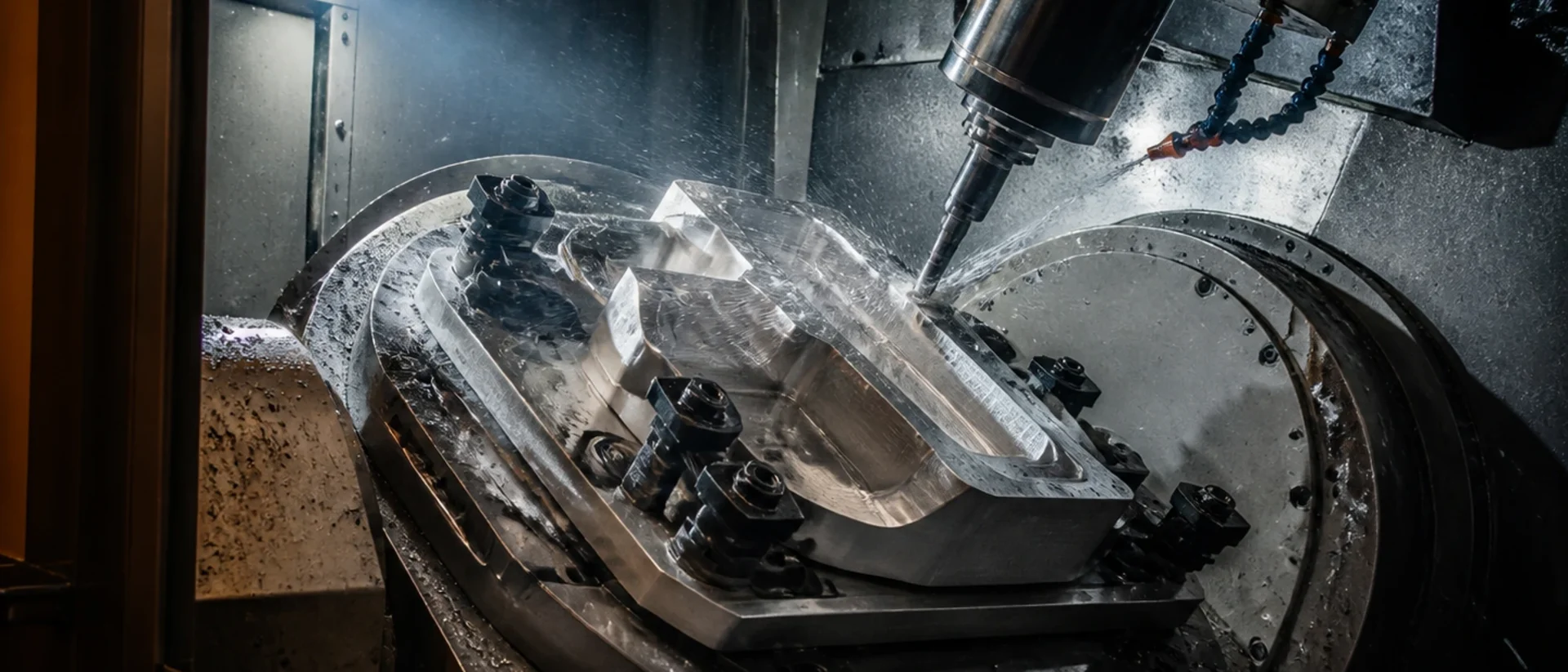
- PART ONE
THE FIRST TIME IT IS CUT
Nobody has made this before, so part one is where the surprises are. It is machined to find them, and what it teaches gets written down while the part is still on the bench.
- PART TWO
THE PRINT CHANGED
A dimension moves, a boss grows, a pocket goes somewhere else. That is not a problem to apologise for; it is what a development programme is.
- PART THREE
IT HOLDS
The geometry settles and the question stops being whether it can be made and starts being whether the next one comes out the same.
WHAT IS KEPT
- PART ONEThe setup — planned for the part that comes after it, not only the one on the table. Part two does not start over.
- PART TWOSend the old part in with the new print. What failed on it tells the shop more than the drawing does.
- PART THREEThe fixture. That is what keeps part eight identical to part one.
One building. The same setup sheet. The third revision meets the fixture that held the first.
◆Stock to measured
How a part runs, start to finish.
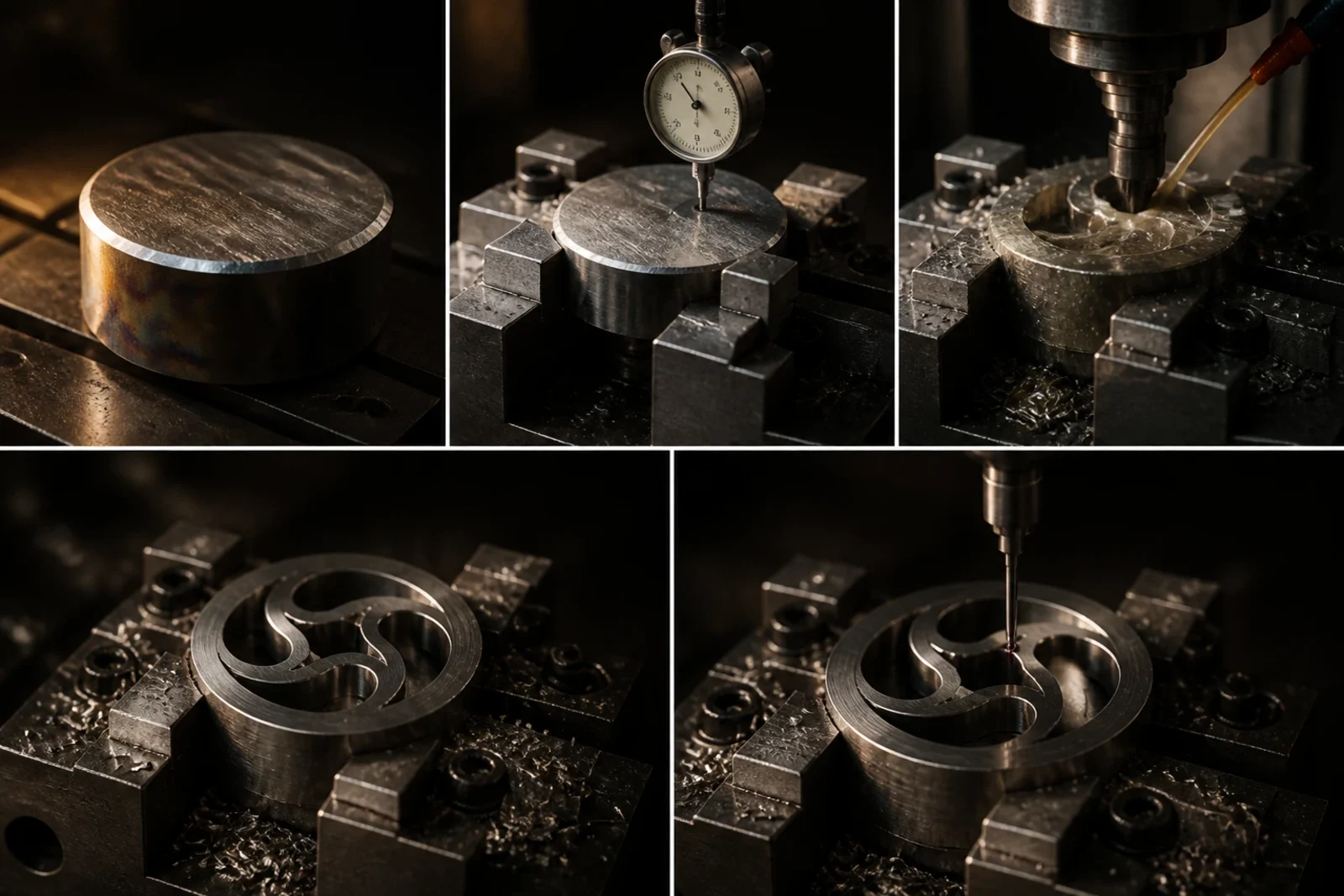
- 01
STOCK
The billet on the table, before anything is decided.
- 02
INDICATED
The datum found and trusted before a single cut is taken.
- 03
CUT
The pocket opened, coolant on the tool, chips clearing.
- 04
FINISHED
The finished geometry, machined from solid in the same fixture.
- 05
MEASURED
The probe back on the face — the number, not an opinion of it.
The last cut is not the last operation. Honing, vapor blasting, shot peening, grinding and hand surfacing all happen on this floor, so a first article leaves finished rather than leaving to be finished somewhere else.
Start with part one.
Send the model and say what you already expect to change. That is the difference between a first article and a first attempt.